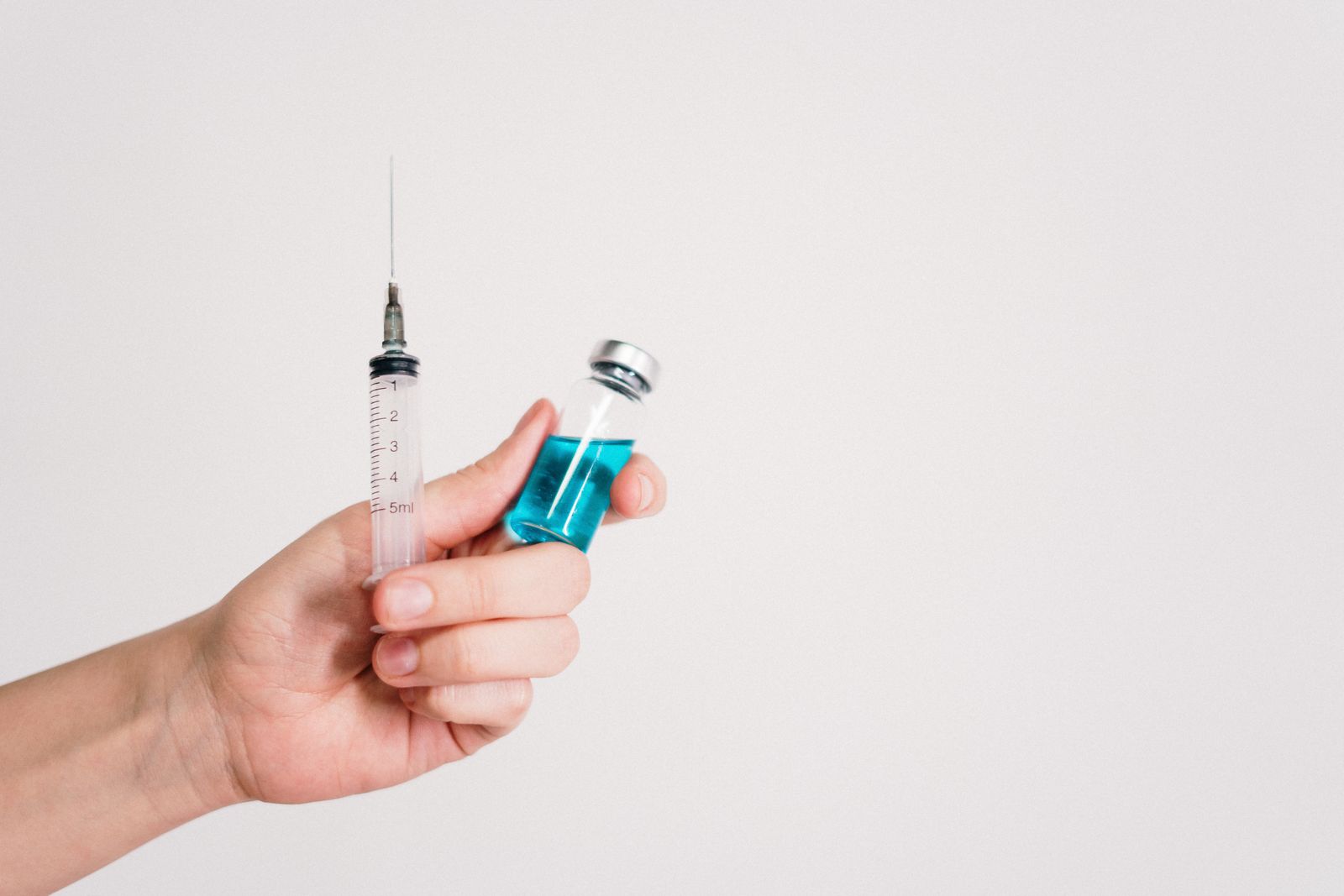
Puppy vaccines come as a series, and the dates matter. This is the schedule Vetsy's vets follow. It is based on the World Small Animal Veterinary Association's 2024 guidelines, adapted for India, where rabies and leptospirosis are common.
The puppy schedule
- 8 weeks: combined vaccine (DHPPi-L), first dose
- 12 weeks: DHPPi-L, second dose, and rabies, first dose
- 16 weeks: DHPPi-L, third dose, and rabies, second dose
- 26 weeks (about six months): DHPPi-L booster
- A year after the puppy rabies doses: rabies booster
DHPPi-L protects against distemper, hepatitis (adenovirus), parvovirus, parainfluenza and leptospirosis. What each one protects against.
If your puppy's first dose was given at six weeks, that is fine. WSAVA's rule is a dose every two to four weeks until the puppy is 16 weeks or older, then the 26-week booster.
Why so many doses
Puppies get antibodies from their mother's milk. These protect them for the first weeks, but they also stop a vaccine from working, and they fade at a different age in every puppy, in some not until 16 weeks or later. Repeating the vaccine until 16 weeks makes sure at least one dose arrives after they have gone. The 26-week booster protects the few puppies whose maternal antibodies lasted longer still, instead of leaving them unprotected until their first birthday.
Rabies is given twice, at 12 and 16 weeks. WSAVA advises a second puppy dose where rabies is common, as it is in India, so that every puppy responds.
Adult dogs
- Every year: DHPPi-L and rabies
- When needed: a kennel cough vaccine before boarding or day care
WSAVA notes that the distemper, parvovirus and hepatitis parts of the vaccine protect for at least three years, while leptospirosis protection lasts about a year. The combined vaccines used in India bundle them, so in practice your dog has one combined dose a year. Some clinics stock separate vaccines and can space out the longer-lasting ones; ask your vet.
An adult dog with no records
If you adopt an adult dog, or its records are lost, the vet will usually give the combined vaccine and rabies straight away, a second dose two to four weeks later for leptospirosis, and then move to yearly boosters. The whole puppy series does not need to be repeated.
Rules that keep the schedule working
- Vaccinate only a healthy dog. If your dog is unwell, tell the vet; the dose may be put off for a few days.
- Keep to the dates. If a puppy dose is late by more than a few weeks, the vet may add a dose. Do not simply skip it.
- Keep the record. The vaccine name, the batch sticker, the date and the vet for every dose. Boarding kennels, travel and any new vet will ask for it.
- Do not buy and give vaccines yourself. Vaccines have to be kept cold and given correctly; a vaccine that has warmed up may not protect at all.
- Indoor dogs need vaccines too. Parvovirus comes in on shoes, and rabies needs only one contact with an infected animal.
Before the series is finished
Keep your puppy off ground where unknown dogs toilet, but do not shut it away. Veterinary behaviourists recommend careful socialisation from the first weeks: carry it outside, and let it meet healthy, vaccinated dogs in clean, private places.
How Vetsy keeps you on schedule
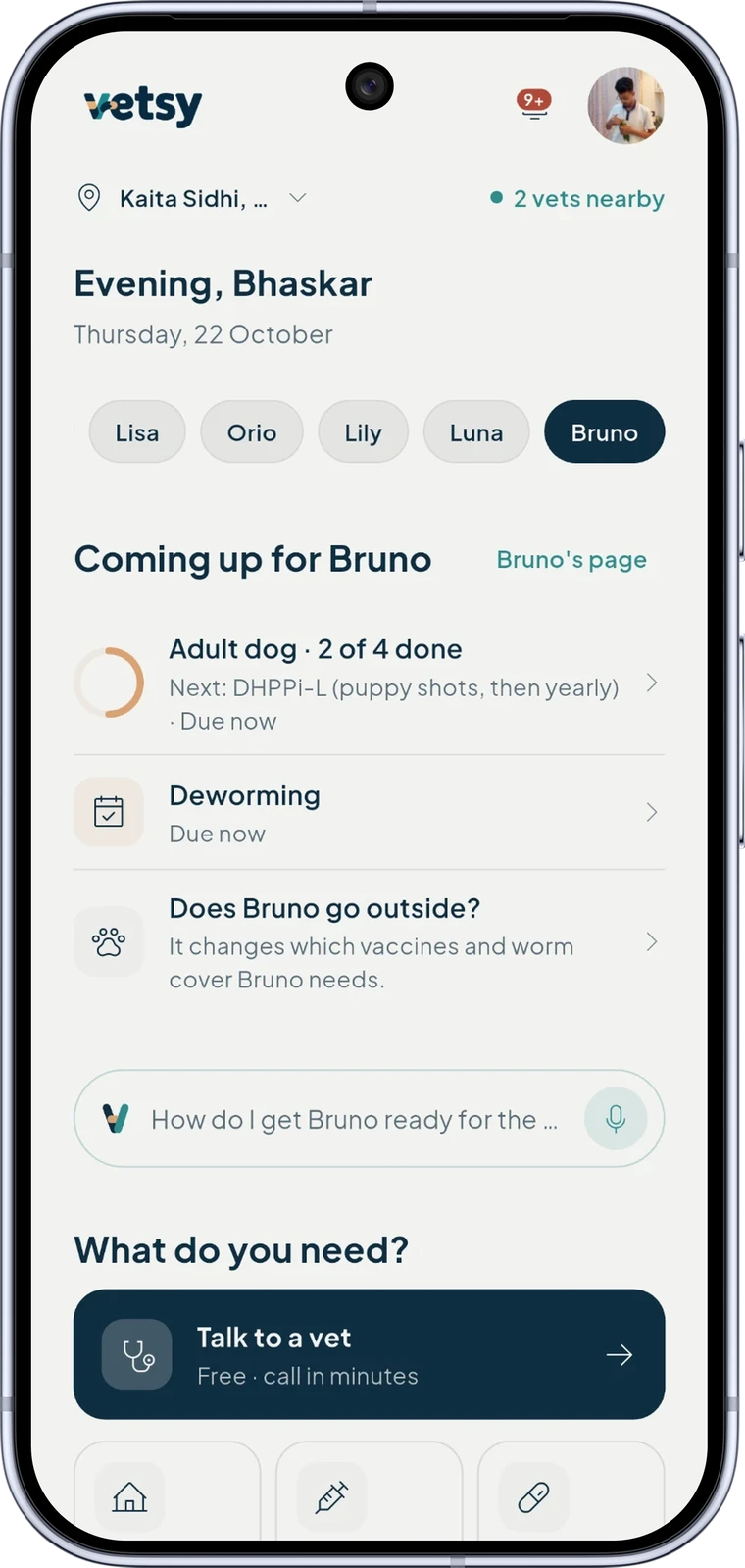
Vetsy's vets vaccinate at home and record each dose, with its batch number, in your pet's profile in the app. The app follows this schedule and reminds you before the next dose is due.
Sources
General information, not a diagnosis. If your pet seems unwell, contact a vet.