
Most pet parents do the important things well: good food, regular grooming, a vet visit when something seems wrong. Where care slips is quieter. The record of what was done, and when, is scattered.
Think about where your pet's history lives today. A paper vaccination card in a drawer. Prescriptions photographed and lost somewhere in a phone. Dates that exist only in someone's memory. That works until a vet asks a simple question nobody can answer.
What a complete record holds
- Vaccinations: the vaccine, the date, the batch number and who gave it. Boarding kennels, groomers and travel often ask for proof of rabies vaccination in particular.
- Deworming and tick and flea treatment: the product and the date, so the next dose is on time.
- Prescriptions: the medicine, the dose, how long it was given and how your pet responded.
- Visit notes and test results: diagnoses, blood reports and scan findings.
- Weight over time: one of the simplest early warnings of illness.
- Allergies and reactions: anything your pet has reacted badly to before.
Why it matters
A missed vaccine leaves a real gap
Puppy vaccines work as a series, and an adult's protection depends on boosters arriving on time. When a date is lost, it is hard to know whether your pet is protected, and the vet may have to repeat doses to be safe. The vaccination schedule only works if someone is keeping track of it.
An emergency vet needs your pet's history fast
A vet seeing your pet for the first time, perhaps at night, needs to know its current medicines, past illnesses and allergies before choosing a treatment. Some medicines should not be combined, and a past reaction to a drug changes what a vet will use.
Patterns only show over time
A slow drop in weight, ear infections that return every monsoon, skin flare-ups after a change of diet: each looks minor on its own. Laid out by date, they point to a cause.
How to keep a record that works
- Keep one record for each pet, in one place.
- Ask for a written or digital note after every visit, not just a spoken summary.
- Keep the sticker from every vaccine vial with the date it was given.
- Note the product and date every time you deworm or use a tick treatment.
- Weigh your pet regularly and write it down.
- Take the record to every vet, especially a new one.
Where Vetsy fits
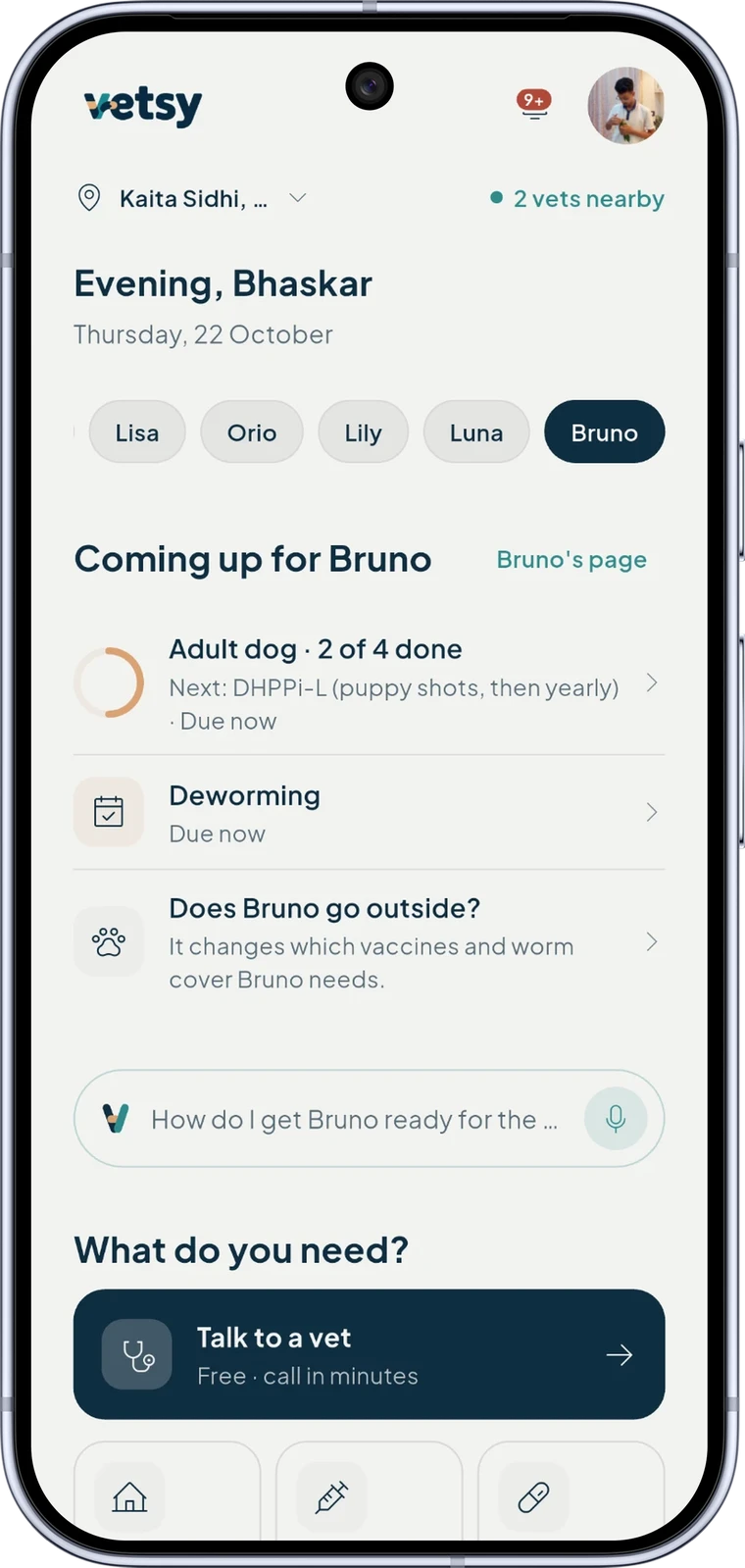
We built the Vetsy app because this problem kept coming up in our own consultations. When a Vetsy vet vaccinates or treats your pet, the vet adds the record to your pet's profile: the vaccine and its batch number, the prescription and the notes. You can add older records yourself, share them with any vet, and the app reminds you when the next vaccine or deworming is due.
Sources
General information, not a diagnosis. If your pet seems unwell, contact a vet.