A home visit brings a registered veterinarian to your door. Your pet stays in its own space, and you skip the travel and the waiting room. This is what to expect, and how to get the most from the visit.
What the vet will do
Ask about your pet's history
Expect questions about appetite, drinking, stools, energy, any vomiting or coughing, past illnesses, medicines and vaccines. The answers guide everything that follows.
Examine your pet
A full examination usually covers:
- weight and body condition
- temperature
- the heart and lungs, with a stethoscope
- the eyes, ears, nose, mouth and teeth
- the skin and coat, including a check for ticks and fleas
- the belly, felt for pain or swellings
- joints, movement and lymph nodes
Treat, or plan the next step
Depending on what is found, the vet may vaccinate, deworm, give an injection, clean a wound, take a blood or skin sample for a laboratory, or write a prescription and show you how to give it.
What a home visit cannot do
Surgery, X-rays, ultrasound and hospital care need a clinic. If your pet needs any of these, the vet will tell you and explain why. In an emergency, such as difficulty breathing, collapse or heavy bleeding, go straight to the nearest clinic. Home visit or clinic: how to choose.
How to prepare
- Gather records: vaccination cards, past prescriptions and test reports.
- List current medicines and food, including supplements and treats.
- Write down your questions so none are forgotten.
- Film the symptom: a short phone video of a cough, a limp or a fit is very useful, because pets often stop doing it once the vet arrives.
- Keep a fresh stool or urine sample if the vet asks for one.
- Keep your pet in before the vet arrives. Shut a cat in a room in advance; a cat under the bed is hard to examine.
- Choose a spot with good light and a non-slip surface, such as a mat on a table or on the floor.
- Have a lead or a towel ready for a nervous pet, and treats if your pet takes them, unless the vet needs a fasting blood sample.
Booking a visit with Vetsy
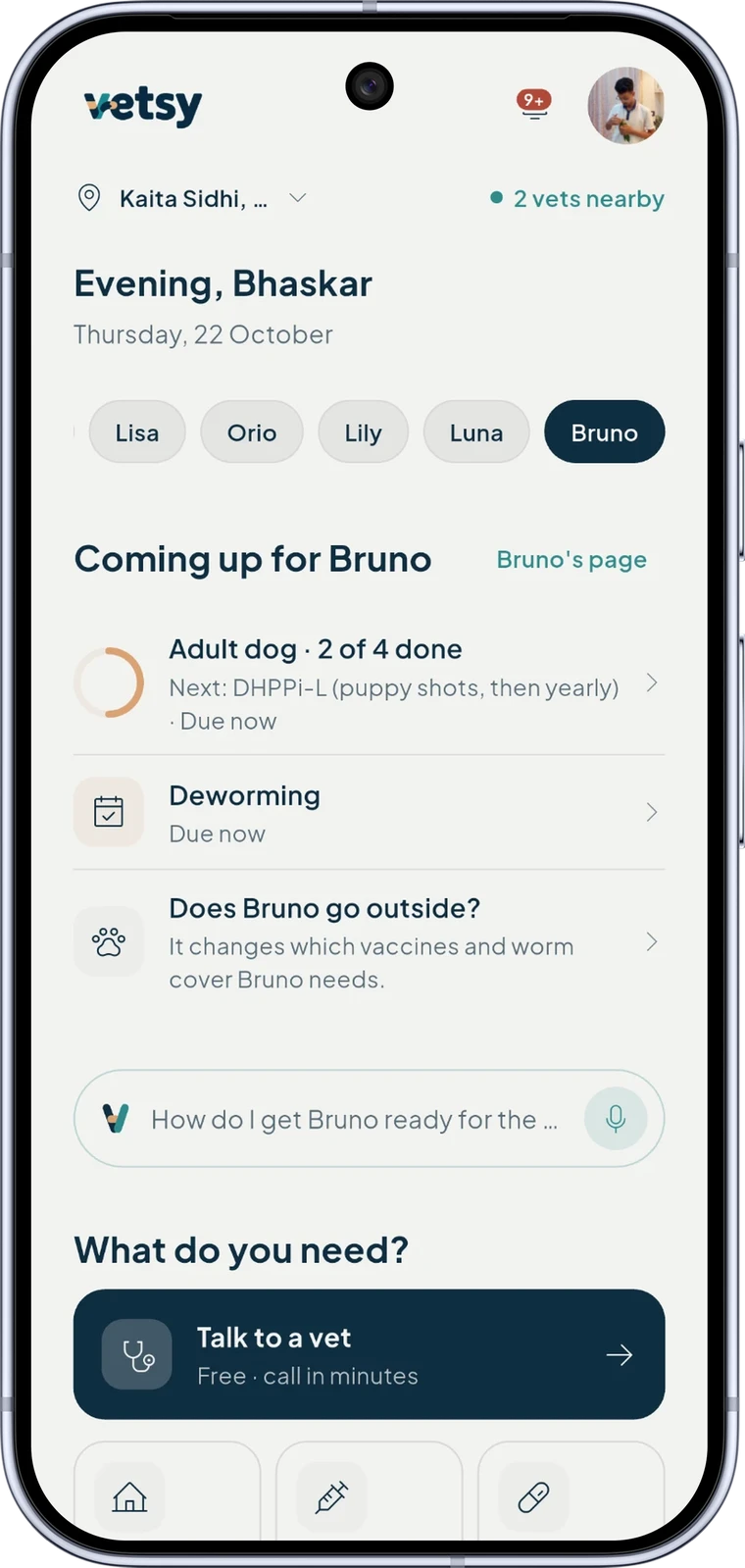
You book in the Vetsy app, choosing the service and the time. Every Vetsy vet is registered with a veterinary council, and you can see the name and registration number of the vet treating your pet. After the visit, the vet adds the record to your pet's profile: vaccines with their batch numbers, prescriptions and notes. The app then reminds you when the next vaccine, deworming or follow-up is due.
Sources
General information, not a diagnosis. If your pet seems unwell, contact a vet.