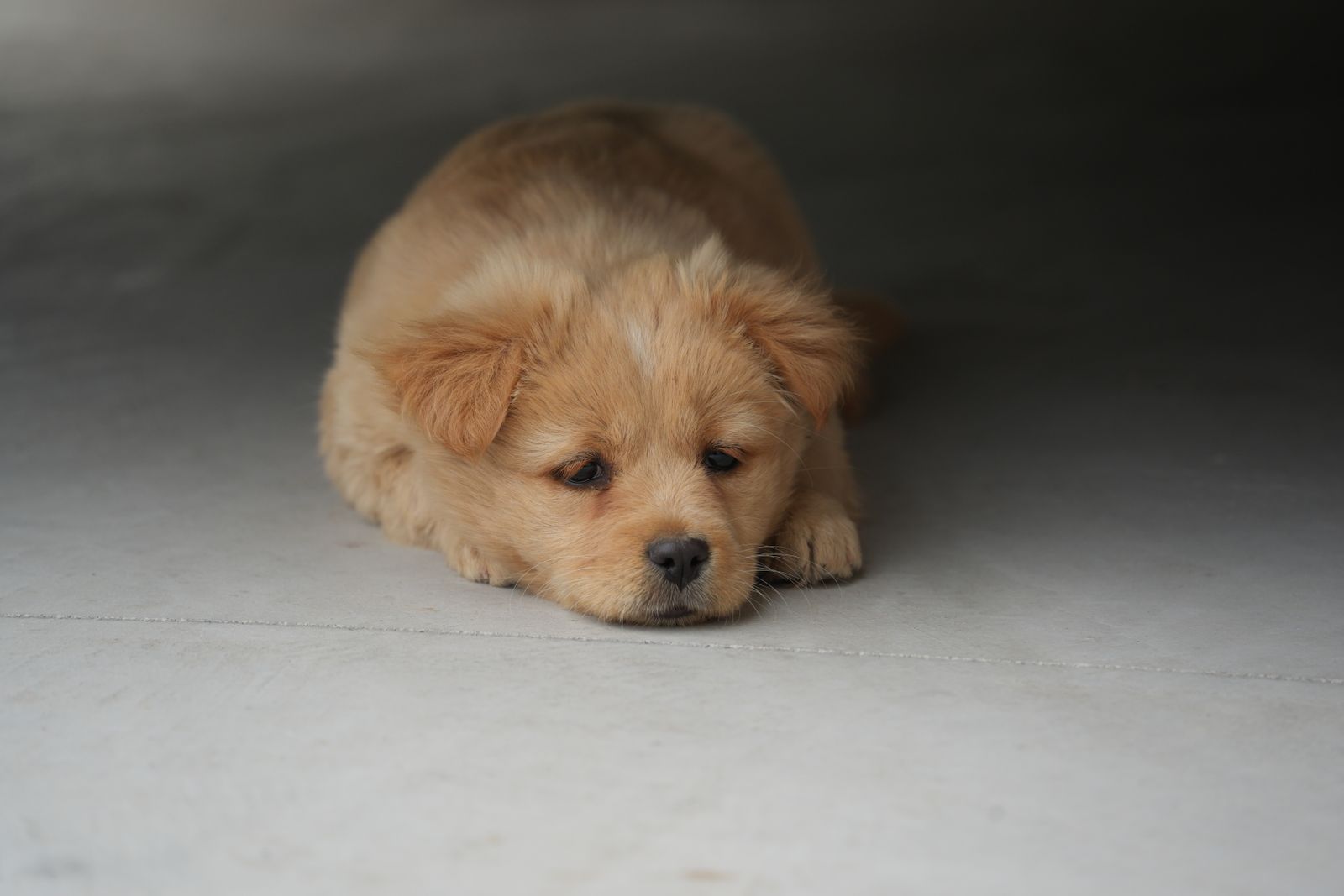
Canine parvovirus, usually called parvo, is one of the most serious infections a puppy can catch. It can take a puppy from playful in the morning to critically ill by night. It is also one of the most preventable, because the vaccine works very well.
What parvo does
Parvovirus appeared in dogs in the late 1970s and spread around the world within a few years. It attacks cells that divide quickly, above all the lining of the intestine and the bone marrow. The gut lining breaks down, causing severe vomiting and bloody diarrhoea, and the white blood cells that fight infection fall just when they are needed most. Bacteria from the damaged gut can then reach the bloodstream.
Any unvaccinated dog can catch it, but puppies between six weeks and six months old are hit hardest.
Signs to act on
- Sudden, severe tiredness: not sleepy, but unwilling to get up
- Repeated vomiting
- Diarrhoea, often bloody, with a strong, foul smell
- Refusing food and water
- Fever, or a body that feels cold in a very sick puppy
If an unvaccinated or partly vaccinated puppy shows any of these, call a vet the same day. Do not wait to see whether it settles.
How it spreads
A puppy does not need to meet a sick dog. Infected dogs shed huge amounts of virus in their faeces, and other dogs pick it up by mouth: sniffing contaminated ground and then licking their paws is enough. The virus survives in the environment for many months, through heat and rain, and ordinary household cleaners do not kill it. It travels on shoes, hands, bowls and bedding.
Treatment
No medicine kills the virus. Treatment supports the puppy while its own immune system clears the infection, which takes several days, and usually means hospital care:
- intravenous fluids to replace what vomiting and diarrhoea take out
- medicines to control vomiting and nausea
- antibiotics, because bacteria can cross the damaged gut into the blood
- careful feeding as soon as the puppy can keep food down
With prompt, intensive treatment most puppies survive; veterinary hospitals report survival of around 85 to 90 per cent. Without treatment, most die. The difference is how quickly treatment starts.
Prevention
Vaccination prevents parvo. Puppies need a series of doses, because their mother's antibodies can block the vaccine. Following the WSAVA 2024 guidelines, Vetsy's vets vaccinate at about 8, 12 and 16 weeks, with a booster at 26 weeks. A puppy is not fully protected until the series is finished. See the full schedule.
Until then, socialise your puppy safely: carry it outside, let it meet healthy, vaccinated dogs in clean private spaces, and keep it off ground where unknown dogs toilet.
If a dog in your home has parvo
- Keep the sick dog away from other dogs, and check that every other dog in the house is fully vaccinated.
- After removing visible dirt, clean hard surfaces and bowls with household bleach diluted about 1 part to 30 parts water. Rinse, and let surfaces dry before pets return. Most other disinfectants do not kill parvovirus.
- Wash bedding hot, or throw it away.
- Ask your vet before bringing a new puppy home, because the virus can stay in the environment for many months.
Sources
General information, not a diagnosis. If your pet seems unwell, contact a vet.